Unpublished Report Warns Australia Is Failing to Control Feral Deer Spread Amid Rising Costs
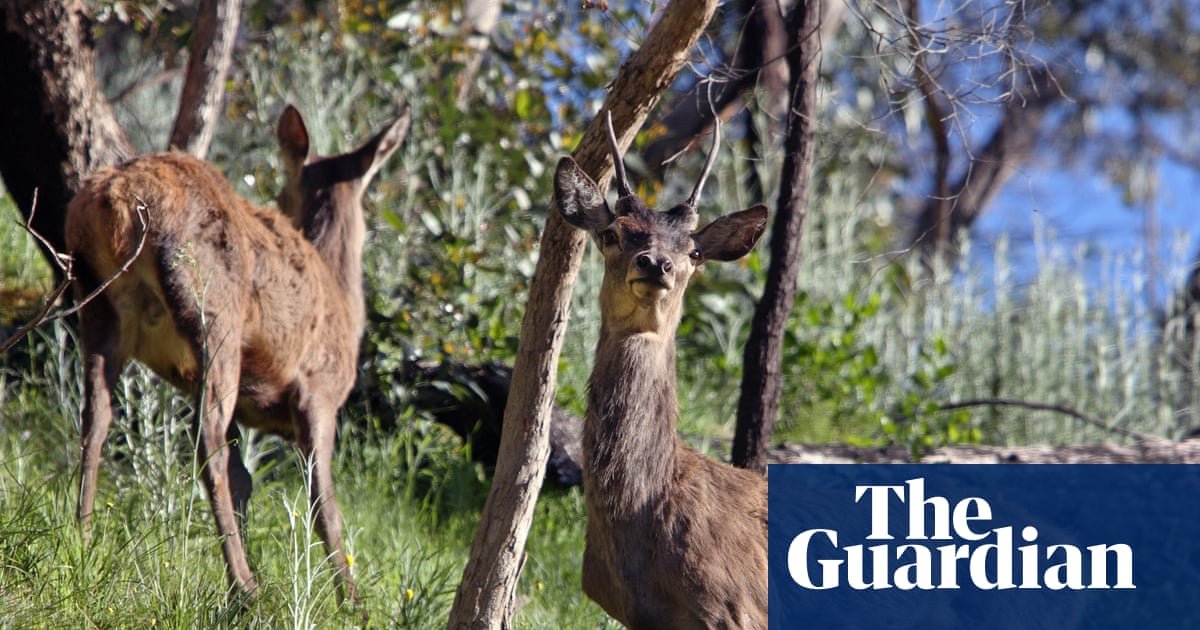
Australia is failing to contain the rapid expansion of feral deer, a crisis highlighted by an unpublished government report that warns the species could replicate the devastation caused by feral pigs if immediate action is not taken. The assessment covers the five-year period from 2020 to 2025 and indicates that the elusive animals are increasingly encroaching upon major urban centers, leading to more frequent human-wildlife conflicts. These encounters range from traffic hazards to bizarre incidents, such as two men being fined after becoming lost in the bush while nude sunbathing and spooked by deer.
The report identifies deer as one of the country’s most rapidly increasing invasive pests, noting that their numbers and territorial spread have grown significantly. This expansion is costing farmers and land managers more than $91 million annually in production losses and management time. Prof Euan Ritchie, president of the Australian Mammal Society and a professor at Deakin University, stated he was not surprised by the findings. He emphasized that the report demonstrates a sustained failure by governments to invest adequately in controlling deer populations, which severely impact agriculture, native wildlife, road safety, and culturally significant sites.
There are six established species of feral deer in Australia: chital, fallow, hog, red, rusa, and sambar. While densities are highest in south-eastern Australia, smaller localized populations exist in South and Western Australia and the Northern Territory. The report card, produced by the National Vertebrate Pest Coordinators, shows that every state and territory is failing or floundering in their control efforts, with one notable exception. South Australia received a green rating in all four categories assessed under the traffic light system, demonstrating high confidence that the state had decreased the abundance, distribution, and environmental and agricultural impacts of deer.
In contrast, New South Wales and Tasmania were given red ratings in all four categories, while Queensland and the Australian Capital Territory received three reds and a yellow. No other jurisdiction received a single green pass mark. Reece Pianta, advocacy manager for the Invasive Species Council, said the report confirms what land managers have observed on the ground for years. In May 2025, the council released footage showing the Gold Coast under siege by feral deer. Pianta argued that deer represent the next major invasive threat, comparable to feral pigs, but noted that current interventions could still make a significant difference in containing or reversing their spread.
Prof Andrew Lowe, director of the Adelaide University Environment Institute, described the report as a positive story for South Australia, aligning with his observations. He explained that the state began grappling seriously with the issue in 2022 after estimates showed annual damage would rise from $36 million to $241 million by 2031. Since launching a $4 million eradication program, deer numbers have massively declined, though they are now seeking refuge on urban fringes where culling is more expensive. Lowe stated that functional eradication would require approximately another $10 million over ten years, arguing that this cost is negligible compared to the potential $240 million in damages if action ceases.
This report was produced in the Europe Brief News newsroom.