
Spain PM Admits Trust in High-Speed Rail Broken After Deadly Collision Near Urda
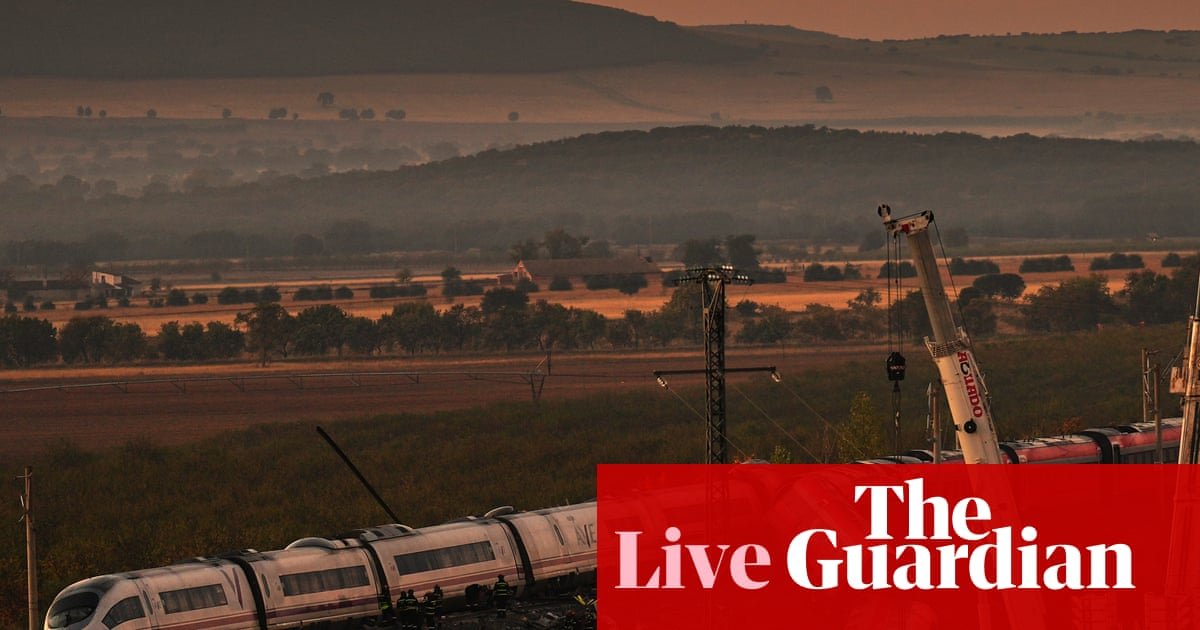
Madrid – Spanish Prime Minister Pedro Sánchez has publicly admitted that public confidence in the nation’s high-speed rail network has been shattered following a catastrophic train collision on Wednesday that resulted in at least 69 deaths and injured more than 100 individuals. The incident, which occurred just before 9am near Urda in the central region of Castilla-La Mancha, has triggered a nationwide debate regarding the safety protocols of Spain’s rail infrastructure. Sánchez stated that the Spanish state was working tirelessly to provide timely information to the families of the victims, noting that those affected include citizens from at least 23 different foreign countries. He emphasized that his government remained committed to uncovering the precise causes of this second deadly collision involving high-speed trains within a single year.
The accident involved two trains traveling from Madrid toward the southern region of Andalucía. One train operated by the state-owned company Renfe collided with the rear of another train belonging to the private operator Iryo, which had come to a halt. The impact knocked several carriages off the tracks. Sánchez described the recurrence of such severe accidents as unacceptable for a country possessing such a powerful high-speed system. He asserted that the government’s responsibility extended beyond merely diagnosing the causes; it also required offering concrete solutions to ensure that tragedies of this magnitude would not recur. This follows a similar crash nine months prior near Adamuz in Andalucía, where 46 people were killed and dozens injured when Renfe and Iryo trains collided on the same line.
Following the Prime Minister’s remarks, Spain’s Transport Minister, Óscar Puente, addressed the press amid growing pressure for his resignation. Puente dismissed calls to step down, stating that his current duty was to focus on providing solutions to restore trust rather than discussing his job security. He declared that if the investigation revealed organizational or control failures, the government would act accordingly, and individual responsibility would be pursued if necessary. Puente suggested that evidence currently pointed to a failure within the command and control centre of Adif, Spain’s state infrastructure operator. He explained that the LZB signaling system, designed to automatically halt trains when the line ahead is occupied, had malfunctioned prior to the crash. However, he stressed that such technical incidents were not uncommon and noted that once the system failed, control and decision-making powers reverted to human operators, a standard procedure in other transport sectors.
This report was produced in the Europe Brief News newsroom.