Drought and Oil Expansion Erode Livelihoods in Iraq's Hawizeh Marshes
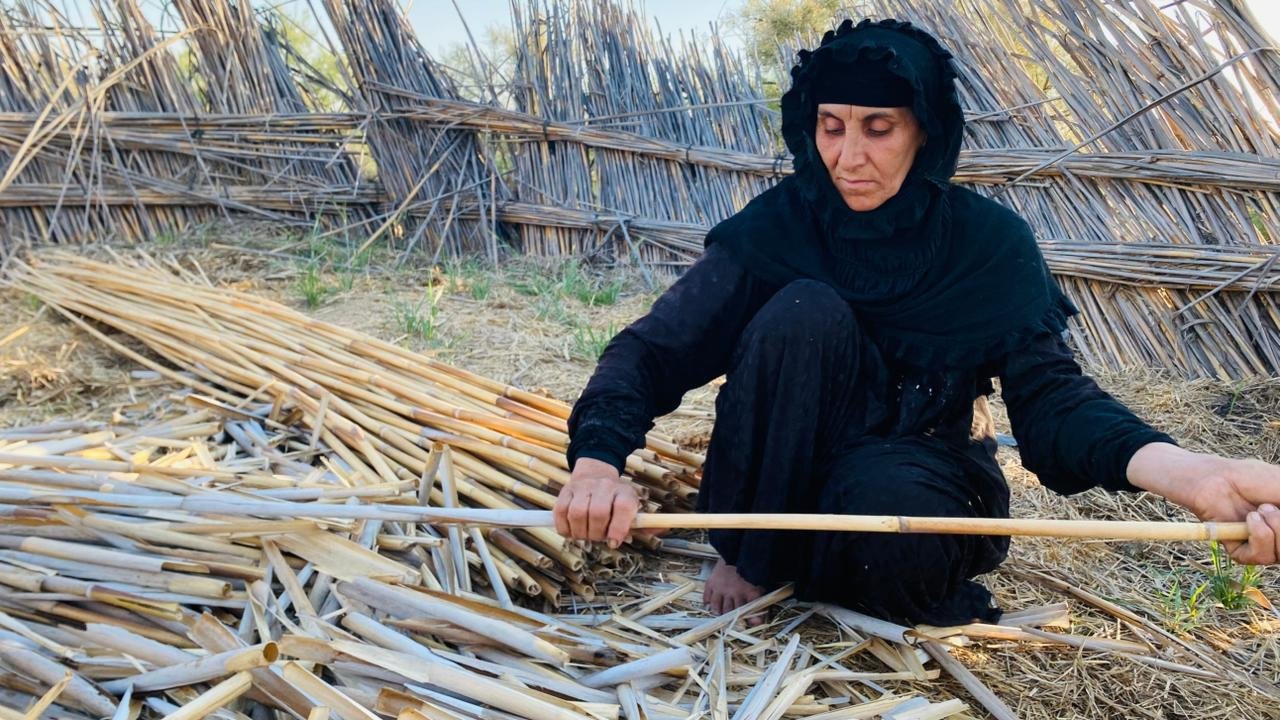
In the Iraqi village of Abu Khasaf, Halima Flaih stands before an empty concrete structure on her property, its roof long collapsed under harsh weather. Built by hand with her daughters and husband, this gathering space now sits on cracked, dry earth, symbolizing the ecological collapse of the surrounding Hawizeh Marshes. Flaih refuses to leave, planning instead to transform the ruin into a micro-museum preserving the heritage of the Ma’adan people. She told Middle East Eye that if water does not return, future generations must learn how their ancestors lived in harmony with the wetlands. The planned archive will display traditional bariya mats woven from wild reeds, cotton fishing nets, and mashoof oars, serving as a resilient record of a community pushed to the brink. "This room is a living extension of everything my family and I have endured," Flaih said. "We want every visitor to see the profound bond we share with this land … and protect the oral heritage we have carried through centuries, before it is lost forever." The Hawizeh Marshes, located approximately 350 kilometres southeast of Baghdad, straddle the border between Iraq and Iran. Inscribed on the UNESCO World Heritage list a decade ago, these ancient wetlands were recognized as a cradle of civilization and a biodiversity sanctuary. For millennia, the ecosystem thrived on a symbiotic relationship with local residents, particularly women who sustained families through milking water buffaloes for qaymar cream, weaving mats, and selling fish in urban markets. Today, this way of life faces extinction due to severe drought and intense development activities. Temperatures in the region can approach 50C in summer, while upstream dams and expanding oil facilities have choked off vital water flows. Mustafa, Flaih’s son, accused the state of deliberately pushing residents out to make way for heavy industry. He told Middle East Eye that earthen berms built to protect oil wells block water access, while operations consume allocations necessary for daily survival. "They took the riches of our land and left us to buy a drop of water," he said. Research published in March by the London School of Economics Middle East Centre supports these claims, noting that a massive earthen berm constructed around the marshes in 2022 significantly curtailed water inflow. Officially framed as a measure against cross-border drug smuggling, the barrier caused dust to replace water, reeds to collapse, and buffalo herds to sicken. Researchers described the resulting displacement of hundreds of families from four villages as a "catastrophe by design." By 2024, one-fifth of Iraq’s environmentally displaced population hailed from Maysan governorate, where the marshes are situated. Although Iraqi officials deny links between oil development and wetland depletion, investigations reveal significant overlaps. Daraj Media found that several oil and gas licences intersect with protected areas in southern Iraq. Chinese company Geo-Jade Petroleum holds a contract for field HWZ 1 within the marshes, which overlaps the UNESCO-protected zone by 300 square kilometres, according to Save the Tigris. Documents obtained by Middle East Eye show that Geo-Jade’s 20-year investment contract entered force in 2023, yet environmental assessment work was not completed until the following year, after field operations had already begun. The impact study remains unreleased. Further documents indicate that in March 2025, Iraq’s state-run Oil Exploration Company requested permission from the water resources ministry to create 10-metre-wide pathways and drill power points in the marshes. A subsequent letter confirmed these locations overlapped the core protected zone. Requests for comment from Iraq’s oil ministry and Geo-Jade representatives regarding mitigation steps received no response.
This report was produced in the Europe Brief News newsroom.