
Russian Drone Strike on Kyiv Science Academy Kills One
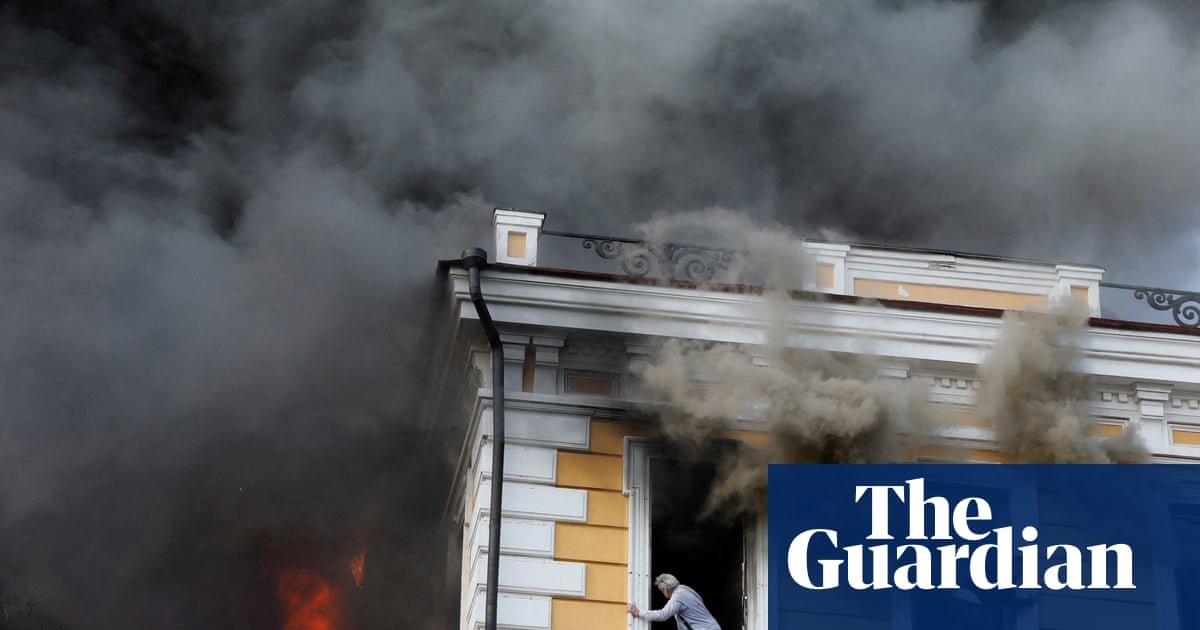
Kyiv – A Russian jet-powered drone struck the National Academy of Sciences in central Kyiv on Monday, killing at least one person and wounding three others. The attack marked the latest in a series of daytime assaults on Ukraine’s capital, with flames engulfing the historic 19th-century building as occupants fled through windows on the first and second floors. Vitali Klitschko, the mayor of Kyiv, confirmed the casualties and stated that the injured were transported to hospitals for treatment.
Anatoliy Zagorodny, president of the national academy, reported that the blast occurred while numerous staff members were inside the facility. He expressed confusion over why Russia had targeted a leading center of scientific research, emphasizing that the institution is not connected to military operations. Zagorodny described the incident as an act of terrorism against science and voiced concerns that some colleagues might still be trapped within the burning structure. The academy is located near several significant landmarks, including the German embassy, the National Opera House, St Volodymyr’s Cathedral, and various government buildings.
Although the sciences building serves as a civilian research institution, it maintains longstanding ties to Ukraine’s defense sector. Among those injured was Volodymyr Horbulin, the academy’s first vice-president and a former high-ranking security official. In a separate incident, another Russian drone hit a nearby private medical center, resulting in at least one death.
The strikes are part of a broader campaign by Moscow involving missiles and increasingly sophisticated jet-powered drones designed to undermine public resilience and damage the economy. These newer drones fly faster and are harder to intercept than older Shahed or Geran-2 models. Ukraine is currently working to develop and manufacture interceptors capable of countering this threat. Moscow has also shifted tactics to launch more attacks during daylight hours, forcing residents to spend more time under air raid alerts. Buildings hit during these daytime strikes are often occupied because many Ukrainians continue working rather than seeking shelter for extended periods.
The violence has extended beyond Kyiv, with a Russian jet-powered drone striking western Ukraine near the border crossing with Poland. This prompted Warsaw to issue an alert warning of a possible air attack and urged residents in the eastern Lublin region to seek shelter. Russian forces have increasingly targeted Ukrainian border crossings with Poland and Moldova, leading Kyiv to consider relocating joint customs checkpoints to neighboring countries. Lt Col Jacek Goryszewski told Poland’s broadcaster TVN24 that the incident posed a threat very close to their border.
Ukrainian President Volodymyr Zelenskyy called on Western countries to intensify pressure on Russia, stating on X that every terrorist attack results in preventable loss of life if pressure is not total. He warned that terrorists will escalate if not stopped in Ukraine and urged the world not to turn a blind eye to such brutal strikes. Meanwhile, Kremlin spokesperson Dmitry Peskov signaled that attacks could intensify, referring to recent Ukrainian strikes deep inside Russian territory as actions that require a price to be paid.
This report was produced in the Europe Brief News newsroom.