Israeli Settlers Burn Palestinian Homes in West Bank
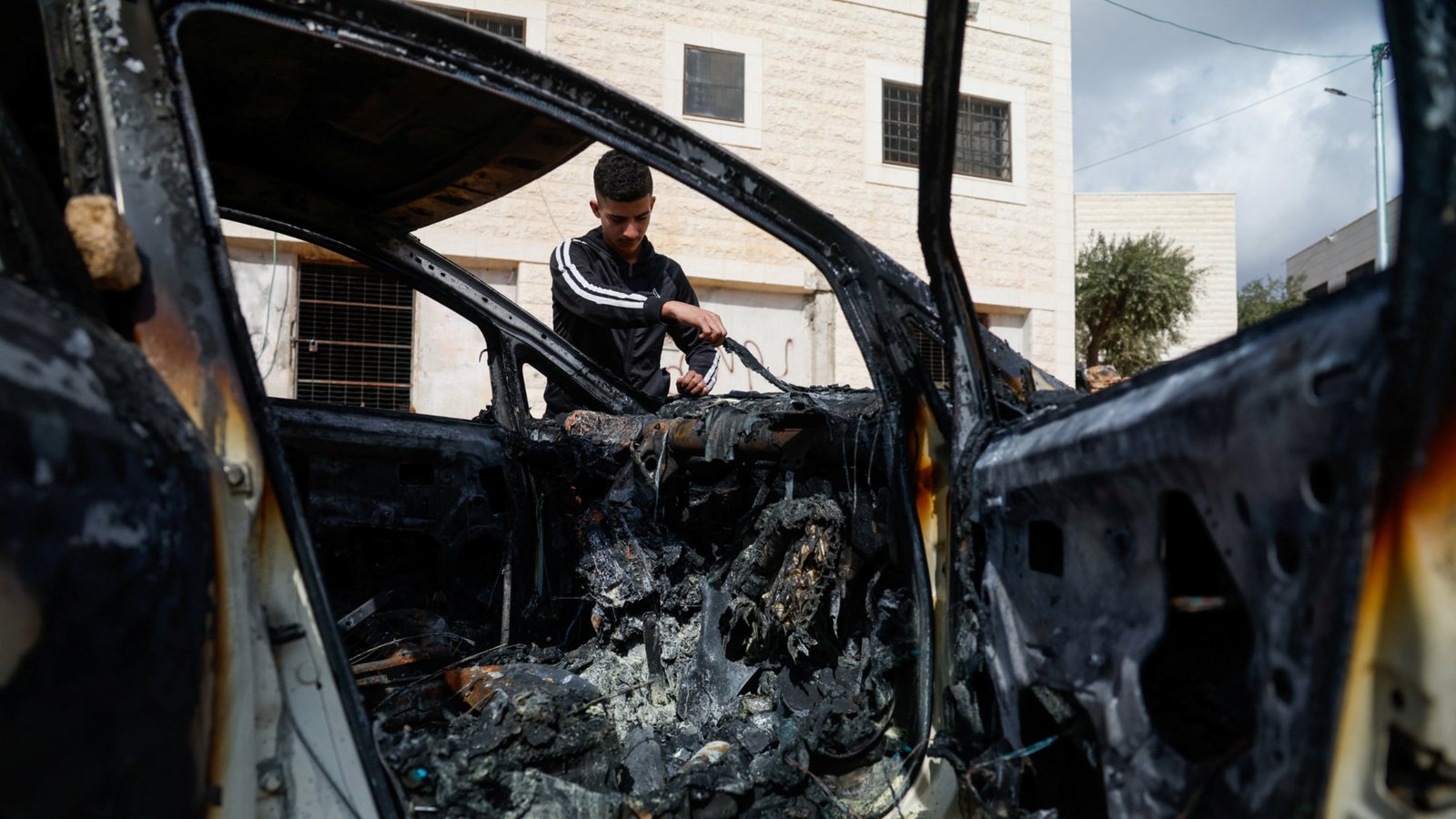
Large groups of Israeli settlers launched a coordinated assault on Palestinian communities in the occupied West Bank overnight into Tuesday, setting fire to residential properties and vehicles. The violence began shortly after midnight on Monday when approximately 100 attackers raided Jalud, a village located south of Nablus. Their primary target was the property of the Toubasi family, who had been displaced from their home in July following a series of previous attacks designed to seize the land. Although an Israeli court had previously ordered the army to secure the family’s return, allowing them to re-enter the house just hours before the latest incident, the settlers arrived in large numbers and ignited two of the family’s homes. Mahmoud Toubasi, the owner of one of the structures, stated that the family returned to find the extent of the destruction and vandalism shocking. He noted that the fire rendered the house uninhabitable and destroyed its contents. Local media reports indicate that Israeli forces eventually arrived at the scene but failed to intervene to halt the arson. Instead, these forces reportedly protected the settlers, forcing the Toubasi family to evacuate once again under gunpoint. During the operation, the army clashed with some of the rioters who had blocked roads, set tires ablaze, and thrown stones at troops, resulting in injuries to three officers.
Israeli political leaders responded to the clashes between the military and the settlers but did not address the violence directed at Palestinians. President Isaac Herzog condemned the unrest as a moral stain and an attack on the rule of law and basic national values. Prime Minister Benjamin Netanyahu characterized the rioters as a small minority that does not represent the law-abiding settler community. In other areas of the occupied West Bank, settlers targeted the village of al-Mughayyir, northeast of Ramallah, where they burned a house and several vehicles. Large numbers of settlers also entered Beitunia and along the Jaryout Road west of Ramallah, accompanied by Israeli forces. Local sources reported that these groups attacked passing vehicles and pelted them with stones, creating an atmosphere of fear among residents. In occupied East Jerusalem, dozens of settlers assaulted two Palestinian men at Damascus Gate late on Monday. Video footage of the incident showed Israeli youths pushing the men to the ground and kicking them. This assault occurred during the Jewish holiday of Sukkot, which has drawn crowds to the Muslim Quarter of the Old City and areas surrounding Al-Aqsa Mosque. Consequently, dozens of Palestinian shops have been ordered to close to facilitate Jewish rituals, and residents have been forced to remain indoors.
This escalation in settler violence against Palestinians in the occupied West Bank and East Jerusalem has intensified sharply since the start of Israel's genocide in Gaza in October 2023. Settlers now carry out near-daily attacks involving arson, vandalism, physical assaults, and forced displacement, often under the protection of Israeli forces. More than 1300 Palestinians have been killed in the occupied West Bank since 2023. Earlier this year, the UN Independent International Commission of Inquiry on the Occupied Palestinian Territory described the escalation as unprecedented and sustained. The commission stated that the Israeli government supports these attacks through financial backing, logistical assistance, and military protection. Srinivasan Muralidhar, chair of the commission, asserted that settler violence is the direct outcome of Israeli policies that support, enable, and protect such actions. According to the UN Office for the Coordination of Humanitarian Affairs (Ocha), more than 1600 settler attacks resulting in Palestinian casualties or property damage were recorded between the beginning of January and 14 September. This averages 6.7 attacks per day, compared to five per day in 2025, when 1836 attacks were recorded. Around 1500 attacks were recorded in 2024, compared with 1291 in 2023 and 853 in 2022. This report was produced in the Europe Brief News newsroom.