Hundreds of Thousands Protest in Madrid as Spain's Housing Crisis Deepens After Parliament Rejects Government Decrees
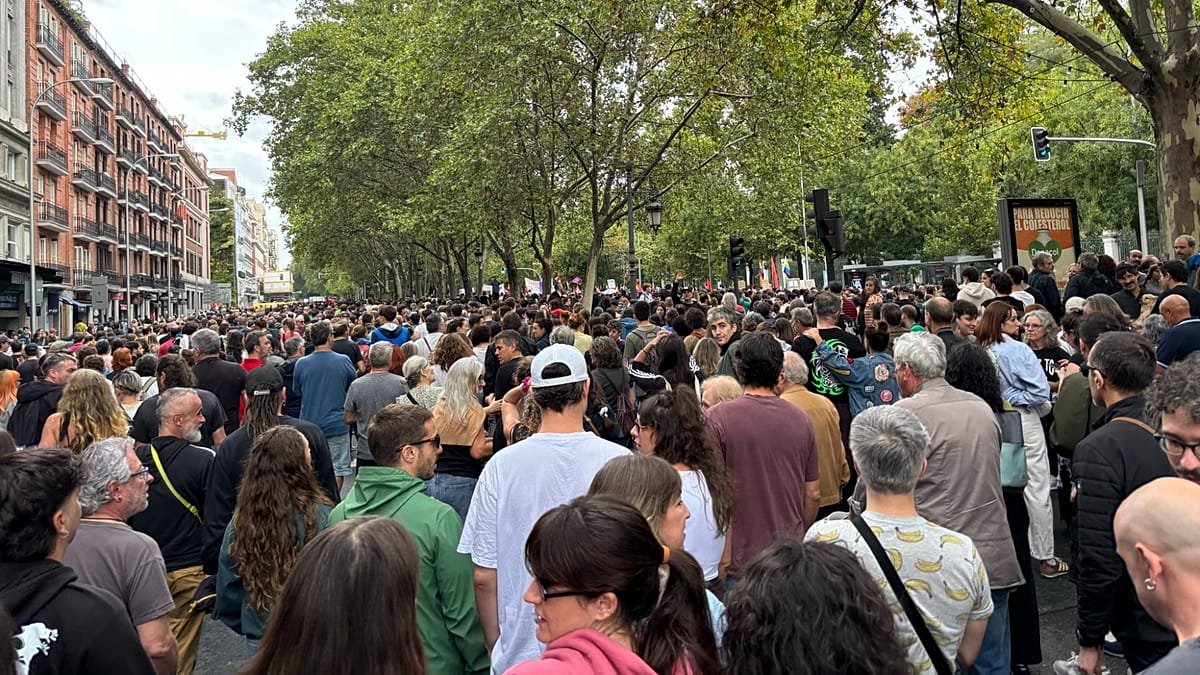
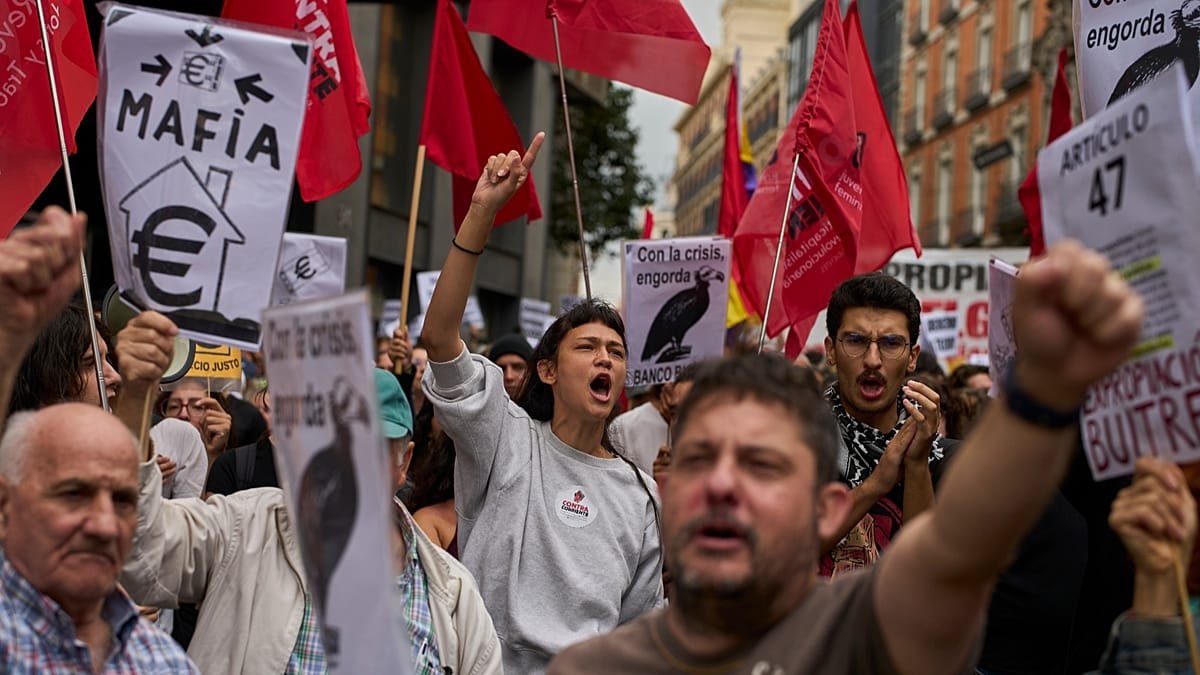
Madrid – Hundreds of thousands of demonstrators took to the streets across Spain on Saturday to protest against the country’s escalating housing crisis, following a decisive parliamentary rejection of two government decrees designed to strengthen tenant protections. The protests, which included a massive rally in the capital where organizers claimed nearly 500,000 participants while authorities estimated around 70,000, reflect growing public frustration over rising rents and property speculation. In Madrid, activists have maintained a camp for approximately one week in Puerta del Sol, one of the city’s most prominent tourist squares, with roughly 2,000 people remaining there by its seventh night. Participants carried placards demanding a general strike and chanted slogans such as "Down with rentierism," while the demonstration remained peaceful under heavy police surveillance.
The unrest was triggered by the Congress of Deputies voting down the government’s legislative proposals on Friday. The first decree failed by 172 votes in favor to 178 against, and the second was rejected by 166 votes in favor to 184 against. Opposition parties including the People’s Party (PP), Vox, and UPN voted against the measures, while Junts refused to support them. Prime Minister Pedro Sánchez concluded his speech with a stark warning that history would judge the opposition harshly, subsequently opening a period of reflection on calling early elections, a decision that rests solely with him. Vice President Yolanda Díaz accused Feijóo, Abascal, and Nogueras of being responsible for evictions, while PP leader Alberto Núñez Feijóo pledged to seek legal formulas to avoid a budgetless term.
In Valencia, tensions escalated significantly as protesters marched toward the Palau de les Arts Reina Sofía, where the Valencia Real Estate Summit 2026 was underway. Some demonstrators breached police cordons and threw objects at officers, prompting a response involving rubber bullets and tear gas. Several individuals managed to reach the upper levels of the building. The march was organized by four groups, including the Tenants' Union and the Housing Union. Meanwhile, in Donostia, protests entered their second consecutive day, initiated by the LAB union with backing from the Tenants' Union. In Cádiz, where average rents reach approximately 900 euros and home prices hit 200,000 euros, the demonstration concluded at City Hall with the reading of a manifesto. Additional rallies occurred in Las Palmas de Gran Canaria, Lanzarote, Fuerteventera, Tenerife, and Teruel, which scheduled a demonstration for Sunday evening.
The Tenants' Union, coordinating the nationwide actions, stated there is an irreparable disconnect between public demands and political decisions. Spokesperson Valeria Racu noted that no date has been set for the proposed general strike, which is being negotiated with other organizations to ensure it is historic. The union is demanding a 50 percent reduction in rents, open-ended contracts, and the expropriation of homes from investment funds. Antonio Garamendi, president of the employers' confederation CEOE, expressed respect for the protests but warned he would take action if a general strike were called, deeming it illegal. Junts spokesperson Míriam Nogueras criticized the decrees as poorly drafted, while secretary general Jordi Turull argued they would discourage property sales. The PSOE countered that their texts already incorporated Junts’ proposals. The protests gained momentum after the eviction of Maricarmen Abascal, an 87-year-old woman whose rent was increased by 275 percent by a new owner before she was allowed to return at a lower rate following public backlash.
This report was produced in the Europe Brief News newsroom.