
Bangkok Floods Kill 40
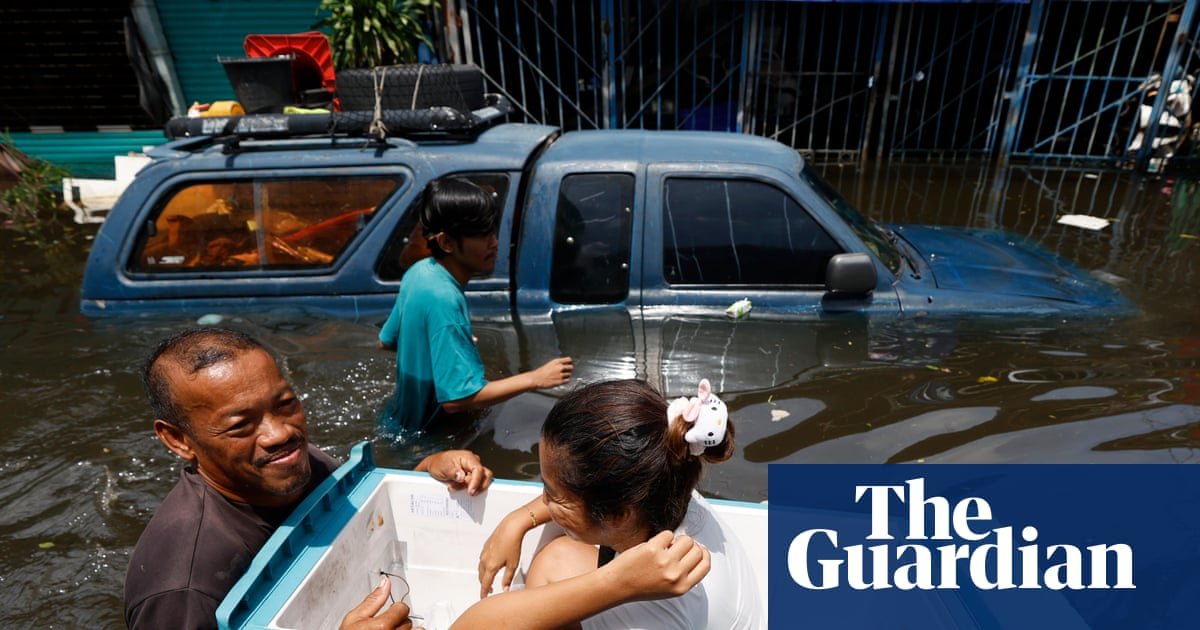
Bangkok – Forty people have died and a state of disaster has been declared across all fifty districts of Thailand’s capital as extreme rainfall transformed streets into stagnant lakes. Experts warn that such catastrophic flooding is likely to intensify across Southeast Asia due to climate change, while local authorities struggle with drainage systems overwhelmed by historic downpours.
The Thai government confirmed the death toll, attributing fatalities to drowning and accidental electrocution. Authorities reported that thousands of residents sought refuge in more than two hundred and thirty shelters throughout the city. Suleemas Kurangkul, a seventy-three-year-old resident of the Khlong Chan flat compound, described the rain as relentless, falling continuously day and night rather than the typical brief evening storms. She noted that water levels rose rapidly, reaching waist height before warnings could be issued, trapping many on upper floors.
In some areas, approximately three hundred millimeters of rain fell within two days, equivalent to half a year of average precipitation in London. The Khlong Chan complex became a symbol of the crisis, with images showing buildings rising from brownish water and car rooftops barely visible above the surface. Although authorities managed to drain the worst of the floodwaters by Thursday, residents like Kurangkul reported strong odors and floating debris as conditions slowly improved.
Prime Minister Anutin Charnvirakul stated that the metropolitan area remains at risk from floodwaters flowing from the north and announced the establishment of a war room to monitor the situation. The disruption extended to major infrastructure, including Suvarnabhumi Airport, where about half of Thai Airways’ workforce was unable to report for work, leading to luggage pile-ups and flight cancellations. Many schools closed, and gridlock kept residents confined to their homes even in less affected zones.
Nikolaos Skliris, an ocean scientist at the University of Southampton, identified a significant trend toward extreme rainfall in central Thailand. He explained that hot seas evaporate more water, allowing warm air to hold greater moisture, which results in heavier downpours. While it is too early to definitively attribute this specific event to climate breakdown without further study, models predict amplified rainfall in the long term.
Data from Copernicus Climate Pulse indicated that a low-pressure system moved from an unusually warm South China Sea over Cambodia and Vietnam before stalling above Bangkok. This pattern was complicated by an abnormally strong El Niño, which typically brings drier summers to the region but recent research suggests exacerbates extreme rainfall days.
Naim Laeni, a consultant who co-authored a study on Bangkok’s flood resilience, criticized the government for underestimating the storm’s duration and failing to communicate its seriousness. He noted that the city’s canals handle only sixty to eighty millimeters of rain per hour, whereas localized bursts exceeded these limits with insufficient recovery time between events.
The weather system also impacted neighboring Myanmar, causing flash floods and landslides. Nine people were killed in the village of Ka Det Nge Htein, with eight others missing under mud in another village. Civil unrest and media restrictions in Myanmar have complicated rescue efforts in the region.
This report was produced in the Europe Brief News newsroom.