Gambia v Myanmar ICJ genocide verdict nears
The International Court of Justice is preparing to deliver its judgment in The Gambia v Myanmar, a case concerning allegations of genocide against the Rohingya minority. The ruling is expected in the coming weeks and carries significant weight for international humanitarian law. Antonia Mulvey, executive director of Legal Action Worldwide, stated that if the court finds Myanmar responsible, it will mark the first time the institution has ruled that a state committed genocide. The case stems from events beginning in September 2017, when investigators including Mulvey interviewed refugees at the Bangladesh-Myanmar border. These accounts formed the basis of evidence presented to the court.
Legal experts emphasize that the outcome will have broader repercussions beyond Southeast Asia. Michael Becker, a professor of international law at Trinity College Dublin, described the proceedings as a crucial opportunity for the court to clarify the definition of genocide. He noted that this clarification would have major implications for South Africa’s case against Israel regarding the war in Gaza, where the death toll has reached nearly 75,000 people. The Gambia initiated the proceedings in November 2019 under the principle that all parties to the 1948 Genocide Convention share a common interest in its enforcement, despite having no direct link to the violence.
The Rohingya, a Muslim minority primarily residing in Rakhine State, have faced decades of persecution. Myanmar’s 1982 Citizenship Law excluded them from recognized ethnic groups, rendering most stateless. Officials often refer to them as Bengalis, casting them as migrants from Bangladesh. Restrictions on movement, marriage, education, and healthcare have been documented for years. In August 2017, military clearance operations following attacks by the Arakan Rohingya Salvation Army triggered a mass exodus. More than 700,000 Rohingya fled to Bangladesh within months, joining hundreds of thousands who had previously displaced due to earlier waves of violence in 1978, 1991, and 1992.
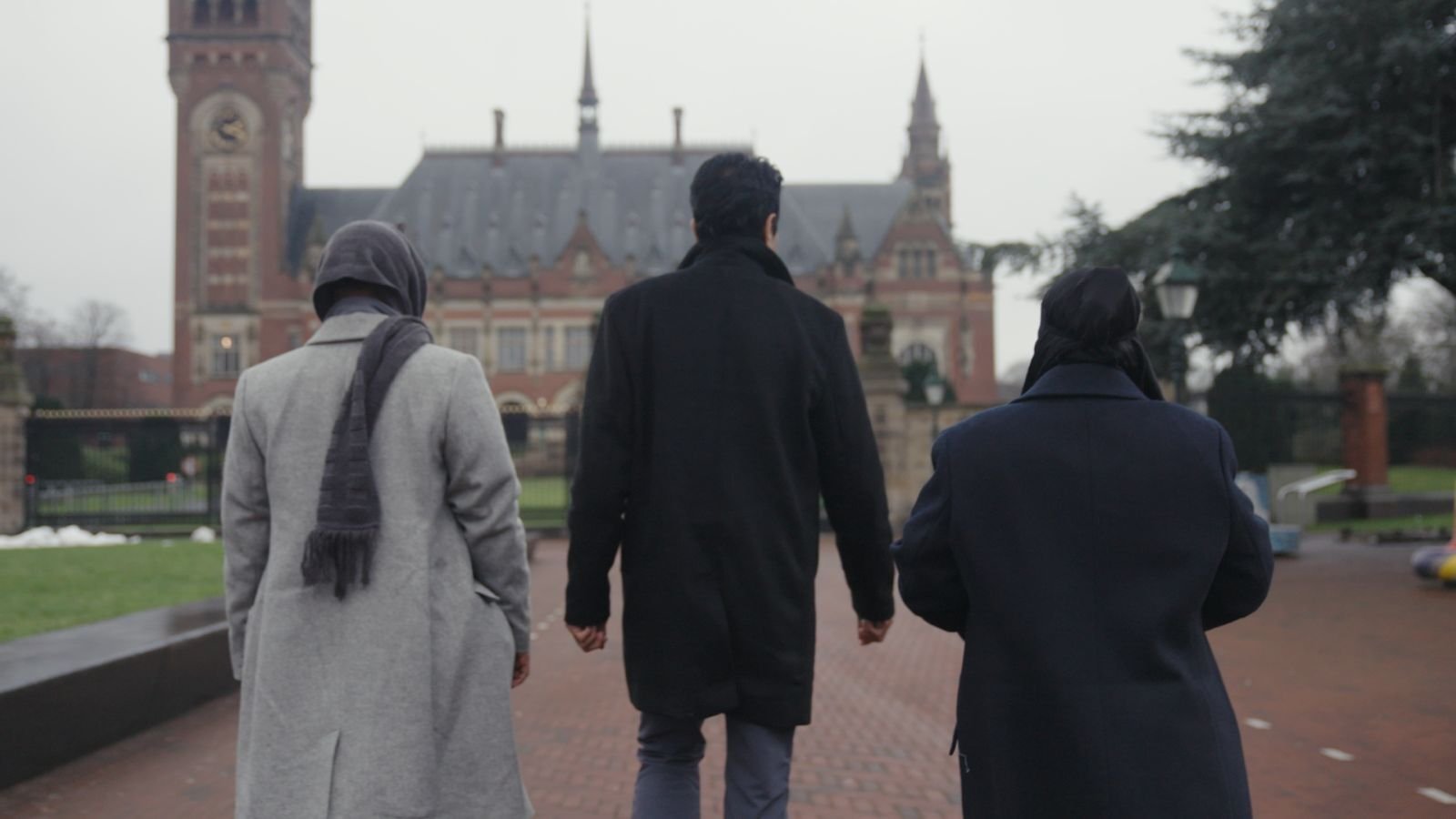
During hearings in January, the court heard testimony from three Rohingya witnesses in closed session. Identified only by initials, they hailed from Min Gyi, Maung Nu, and Chut Pyin. They described the killing of family members and sexual violence endured during their flight. Mulvey reported that the testimony was extraordinarily powerful, with court staff noting they had never heard such evidence before. A delegation of survivors also attended the proceedings.
For the refugees, justice extends beyond legal verdicts. A survey by Legal Action Worldwide of nearly 500 refugees in Cox’s Bazar camps revealed that 86 percent believe citizenship and the right to identify as Rohingya are essential for true justice. One participant expressed hope that the international community would dismantle the 1982 law. Salma, a survivor who attended the hearings, emphasized that victims want acknowledgment of what happened and the restoration of land and property. The UN fact-finding mission concluded in 2018 that there was sufficient information to infer genocidal intent, calling for investigations into senior generals including Min Aung Hlaing, now president. The Gambia relied on this report to bring the case to The Hague, where judges rejected Myanmar’s jurisdictional objections in July 2022, allowing the current hearings to proceed. This report was produced in the Europe Brief News newsroom.