EU Leaders Debate Windfall Tax as Record Fuel Prices Spark Political Crisis Across Continent
European leaders are intensifying discussions regarding the imposition of a continent-wide windfall tax on energy companies, a move driven by near-record fuel and gas prices that have become a central domestic political challenge. With general elections scheduled for next year in eight member states, including France, Italy, Spain, and Poland, policymakers are urgently seeking strategies to mitigate rising public anger and curb the electoral gains of far-right parties. Analysts warn that the current energy shock could be one of the most significant disruptions the continent has faced in decades, prompting urgent action from governments desperate to contain the fallout.
Germany’s Finance Minister, Lars Klingbeil, addressed this growing crisis during a meeting of EU finance ministers in Dublin on Friday. He called upon the European Commission to propose concrete mechanisms for taxing what he described as the excessive profits generated by oil companies. Klingbeil emphasized that several member states have long advocated for such models and demanded formal proposals by next month. He accused oil firms of exploiting the geopolitical situation in the Middle East to overcharge consumers and significantly inflate their profit margins. His comments come as oil futures climb back above $100 a barrel, representing an increase of approximately 50% compared to levels before the escalation of conflict involving Iran. Derivatives markets indicate that traders do not anticipate a near-term decline in prices, while escalating attacks across the Middle East continue to threaten vital supply routes.
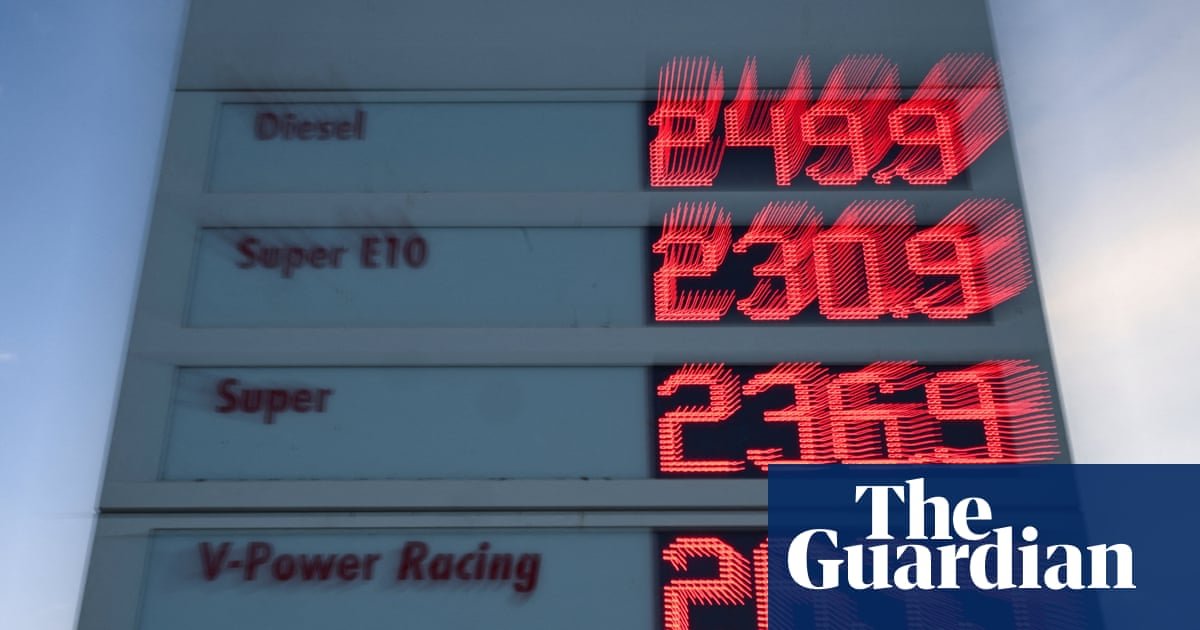
The impact on consumers is already visible at the pump, with prices reaching all-time highs across Europe. In Germany, diesel prices surged to a record average of €2.45 per litre on Wednesday, while petrol hit a fresh high of €2.31 per litre, according to ADAC, Europe’s largest motoring association. The situation is even more acute in the Netherlands, where petrol prices eclipsed previous records to reach €2.73 per litre, with diesel averaging €2.78 per litre. Denmark and Finland have also seen significant increases for petrol and diesel respectively. Across the European Union, petrol prices are now 24% higher than a year ago, diesel has risen by 38%, and jet fuel costs have more than doubled. Benchmark natural gas is trading at €81 per megawatt hour, up 150% year-on-year, with analysts suggesting it could soon hit €100.
Despite the pressure, the EU’s Economic Commissioner, Valdis Dombrovskis, stated that the commission has no plans at this stage for an EU-wide taxing mechanism, though he stressed readiness to engage in discussion and affirmed that member states remain free to impose their own taxes. Consequently, individual nations are adopting divergent measures. In Italy, Prime Minister Giorgia Meloni’s government announced it would scrap road tax for 14.5 million cars and motorbikes starting next year, costing over €2 billion, following a previous cut to diesel duty. Meloni justified the structural measure as essential support for daily commuters. In France, President Emmanuel Macron ordered full government mobilization to secure international supplies and work toward the peaceful reopening of the Strait of Hormuz. Meanwhile, French fishers recently blocked ports in protest of soaring diesel prices, leading to a deal involving zero-interest loans for those with cashflow issues. French Finance Minister Roland Lescure rejected blanket subsidies, calling them a false economy.
Spain doubled its diesel tax discount to €0.20 per litre from September 1, while German Chancellor Friedrich Merz announced a fuel tax cut of €0.17 per litre from October 1 until the end of the year. Merz also initiated talks with the oil industry to introduce a price cap by January 2027. These political maneuvers occur against a backdrop of electoral setbacks for Merz’s centre-right CDU, which was heavily defeated in Saxony-Anhalt by the far-right AfD. The AfD, campaigning on a platform of restoring cheap Russian gas imports, is poised to make further gains in upcoming state elections, highlighting the severe political risks associated with the energy crisis.
This report was produced in the Europe Brief News newsroom.