US House Votes 3rd Time to Halt Iran War as Costs Mount
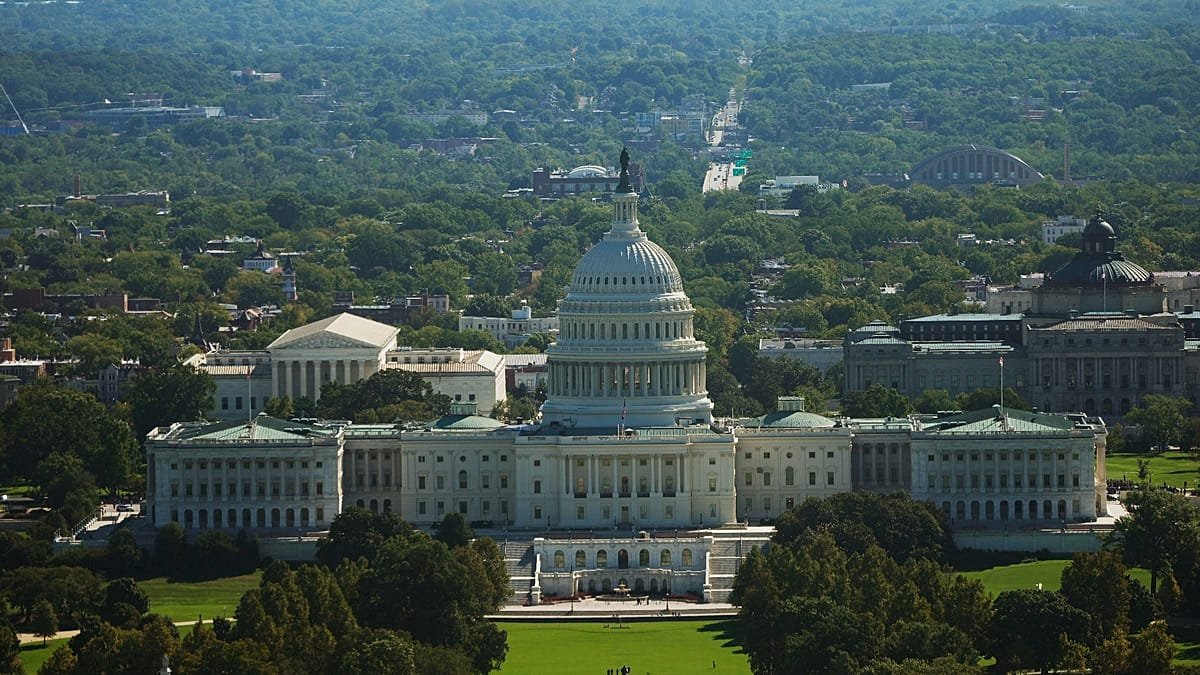
For the third time this year, the US House of Representatives has voted to end the war in Iran, approving a war powers resolution designed to halt President Donald Trump’s ability to continue military operations without explicit congressional approval. The roll call vote, which concluded late Tuesday with a margin of 220 to 204, mirrors earlier efforts made during the summer but saw increased Republican support. While none of these resolutions are expected to reach the president’s desk due to an anticipated veto, the vote highlights growing legislative friction over the ongoing conflict.
The measure passed with seven Republicans joining all Democrats in favor of ending hostilities. This marks a shift from previous votes where only four Republicans supported halting the war. Among those who changed their stance were lawmakers from key battleground states, including Representative Zachary Nunn and Representative Mariannette Miller-Meeks from Iowa, as well as retiring Representative Nancy Mace of South Carolina. They joined other GOP members who had previously opposed such measures, including Tom Barrett of Michigan, Warren Davidson of Ohio, Brian Fitzpatrick of Pennsylvania, and Thomas Massie of Kentucky.
Democrat Representative Seth Moulton, a former Marine who served in Iraq, pushed the resolution forward, criticizing the administration’s prolonged engagement. "Remember when Donald Trump said that this war would last just a few weeks?" Moulton asked. He argued that it is time for Congress to "actually ask tough questions, as the Constitution directs us to do, rather than be subservient to another warmongering administration." Conversely, Republican Representative Brian Mast, chairman of the House Foreign Affairs Committee, defended the president’s actions. Mast stated that Trump is against "forever wars" and is working to end decades of hostility. He emphasized that Iran remains a "continuous ongoing threat to the United States," adding, "Enough is enough."
The conflict, launched by Trump on February 28, has dragged on for nearly seven months, characterized by intermittent deadly missile strikes that have caused significant disruption in the region. As lawmakers head home for the midterm elections, with less than 50 days remaining, the war is playing a substantial role in political campaigns. Voters are confronting high prices, particularly for gasoline, as the conflict disrupts oil flows through the Strait of Hormuz. According to the Congressional Budget Office, the war has cost more than $38 billion as of August 1, with monthly costs projected between $2 billion and $3 billion depending on fighting intensity. The office also projected that inflation will be 0.5 percentage points higher than expected heading into 2027 due to the war.
Public sentiment appears to align with the legislative pushback. An AP-NORC poll in July indicated that most Americans believe the war in Iran has not been worth fighting. Despite repeated attempts by Congress to alter the trajectory of the war, efforts to limit executive power remain difficult given the president’s veto authority. House Speaker Mike Johnson acknowledged the need to lower gas prices but suggested the conflict is entering a "new phase" as allies help stabilize the region. He expressed hope that gas and grocery prices would drop after the election, stating, "I’d love it to happen today."
This report was produced in the Europe Brief News newsroom.