
Kärcher CEO: Europe Faces Perfect Storm of Deindustrialisation
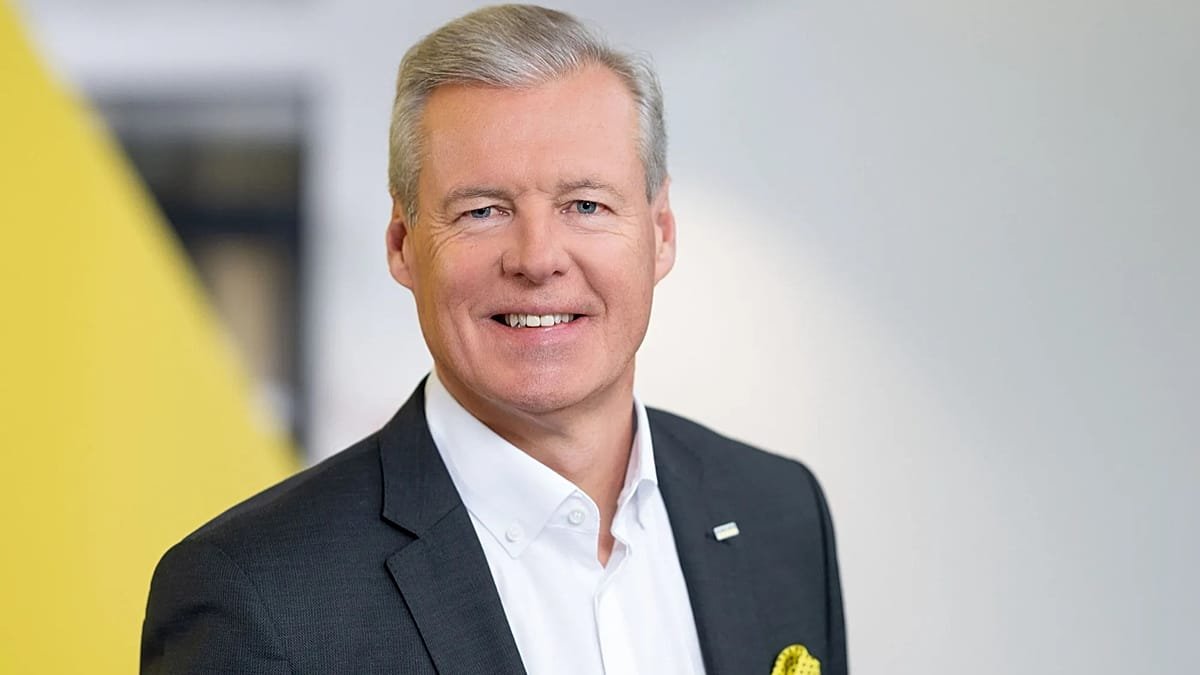
Hartmut Jenner, Chairman of the Board and Chief Executive Officer of Kärcher AG, has issued a stark warning regarding the economic trajectory of Germany and the broader European continent. In an exclusive opinion piece published on 1 November 2026 for Euronews, Jenner described the current situation as a "perfect storm" threatening to accelerate deindustrialisation across Europe. He argued that geopolitical crises are casting a long shadow over the European economy, creating an environment where export-oriented companies face unprecedented challenges from both American trade policies and aggressive technological competition from China.
Jenner specifically criticised the unpredictable nature of United States trade policy, noting that Washington frequently threatens to raise tariffs and erect trade barriers without warning. He labelled this approach a "toxic scenario for free global trade." Simultaneously, he highlighted the threat posed by China’s rapid technological advancement. According to Jenner, Beijing is no longer merely a low-cost manufacturer but has evolved into a highly aggressive competitor in future-oriented fields. He pointed out that China’s success stems from targeted state industrial policies, massive subsidies in strategic sectors, and a currency policy artificially focused on competitiveness. These factors, he stated, contribute to noticeable market distortions and overcapacity, creating an imbalance that makes fair global competition nearly impossible for privately run European firms like Kärcher.
The executive warned that deindustrialisation is no longer an abstract concept but a present reality. He cited the loss of tens of thousands of industrial jobs and declining production volumes as evidence that plant closures and relocations in key sectors such as automotive and manufacturing signal a critical turning point. Despite these headwinds, Kärcher has maintained its position through heavy investment in research and development, with more than 1,000 employees worldwide working on innovations in cleaning robots, battery technologies, and digitalisation. Founded in 1935 and still family-owned, the company generated almost €3.5 billion in turnover in 2025, with 86% earned abroad. It operates in 87 countries, employing 17,000 people globally.
However, Jenner asserted that even innovation leaders cannot prevail against increasingly challenging operating conditions. He criticised sharply rising structural and labour costs, arguing that new production facilities and additional jobs in Germany are barely economically viable under current conditions. While official forecasts predict 1.3% economic growth for Germany, Jenner dismissed this as "cautiously optimistic" and potentially misleading. He characterised the projected growth as "borrowed growth," artificially driven by government debt, defence orders, and subsidies rather than genuine private investment recovery.
Attributing the ongoing economic weakness largely to domestic issues, Jenner blamed "creeping reform fatigue" and a "regulatory frenzy" by government institutions. He argued that regulations from Brussels to Berlin suffocate the courage to embrace change and hinder entrepreneurship. To secure prosperity and social standards, he called for a "real fitness programme for Germany." This includes rigid rule elimination, excessive bureaucracy reduction, and addressing high energy and non-wage labour costs. He urged a cultural shift in the administrative apparatus, advocating for authorities to act as pragmatic, fast service providers supported by artificial intelligence. Finally, he emphasised that demographic trends require necessary debates on labour markets, insisting that value creation remains the precondition for prosperity and that rest leads to rust for both individuals and economies.
This report was produced in the Europe Brief News newsroom.