Italy Deploys 500 Troops to Milan
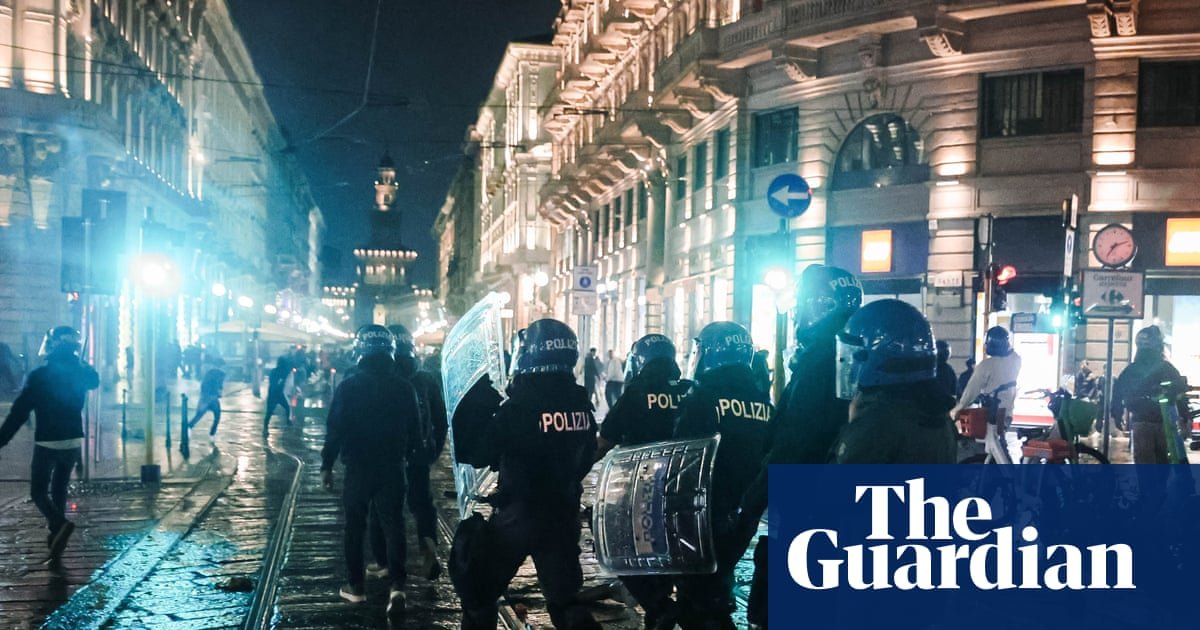
Rome – The Italian government announced on Tuesday that it will deploy 500 soldiers to Milan to restore order following days of violent protests and widespread looting. Prime Minister Giorgia Meloni’s administration vowed a firm response from the state as demonstrations against the rising cost of living escalated into clashes with police, vandalism, and theft. Further demonstrations are planned for Saturday, prompting authorities to prepare additional security measures.
According to Italian media reports, the government plans to swiftly approve tougher new security regulations. These measures include extending preventive detention for minors, cracking down on youth gangs, and banning gatherings deemed a threat to public order. The press agency Ansa reported that one specific measure targets second-generation immigrant youths known as maranza, a slang term describing gangs often from marginalized areas. Foreign Minister Antonio Tajani, who also serves as deputy prime minister, stated that the government would respond firmly to attacks on the state, including through measures aimed at curbing violence by minors.
The unrest in Milan began as initially peaceful protests but descended into chaos when hooded youths set bins ablaze, ransacked shops, and smashed windows, including those surrounding the city’s cathedral. Police used tear gas and water cannons to disperse the violent groups. On Monday, police said they had detained 271 young people during the weekend unrest. Of those, 32 were arrested, including 23 minors and 13 foreign nationals, while 28 others were reported to judicial authorities. Many luxury stores in Milan’s fashion district remained closed as a precaution, with brands like Chanel, Tiffany, and Dior removing merchandise from their windows. Other targeted retailers included Decathlon, Arc’teryx, and Vodafone.
In France, Interior Minister Laurent Nuñez confirmed on Tuesday that military forces would be deployed during planned protests for Saturday. He stated the move was mostly to free police and gendarmes to maintain order. French Prime Minister Sébastien Lecornu told parliament that police presence would be massive, aiming for an immediate return to order after last weekend’s violent riots. Nearly 2,400 people were arrested during the recent unrest in France. Authorities have imposed partial curfews in several cities, including Paris, Bordeaux, Lille, and Nice. In Paris, a curfew applies from 11pm on Tuesday until 6am on Wednesday in areas like Place de la République and Les Halles. Police have also banned carrying cans or bottles of petrol or gas, as well as masks and helmets in some areas.
The images of clashes in France prompted travel advice from countries including the US, China, and Germany. Meanwhile, tensions over the high cost of living have spread across Europe. In Portugal, thousands rallied in Lisbon on Tuesday evening after police dismantled housing protest camps and arrested 55 people. Demonstrators are protesting soaring housing costs and seek to align with actions in neighboring Spain, where tents have been set up in central Madrid for weeks. In Lisbon, protesters voted to re-establish their tent camp from Wednesday.
Opposition politicians in Italy accuse the government of using security as a propaganda tool, arguing that leaders do little to address core issues such as education, housing, and living conditions in marginalized areas. A new movement called 17 October emerged on social media, organizing demonstrations in Milan and other Italian cities each Saturday afternoon until the government collapses. Tensions were also reported in other northern Italian cities, including Bologna, Brescia, Bergamo, and Turin, where 28 protesters were arrested.
This report was produced in the Europe Brief News newsroom.