EU Council Lifts Anti-Corruption Funding Curbs on Hungary, Releasing €4.2 Billion
Brussels – The Council of the European Union has officially terminated the conditionality mechanism that was imposed on Hungary in 2022 due to concerns regarding corruption and the rule of law. This decisive move unfreezes €4.2 billion in previously blocked funding and restores Budapest’s full participation in key EU initiatives, specifically the Erasmus+ student exchange programme and the Horizon Europe research initiative. The decision marks a significant shift in Brussels’ relationship with Hungary following the recent political transition in Budapest.
The conditionality mechanism was originally introduced by the EU in 2022 under the administration of former Prime Minister Viktor Orbán. At that time, member states linked access to substantial EU financial resources to strict adherence to democratic standards and judicial independence. The suspension of funds was intended to pressure the Hungarian government into implementing necessary reforms to address systemic issues identified by European institutions. For several years, this framework remained a central point of tension between Hungary and its EU partners.
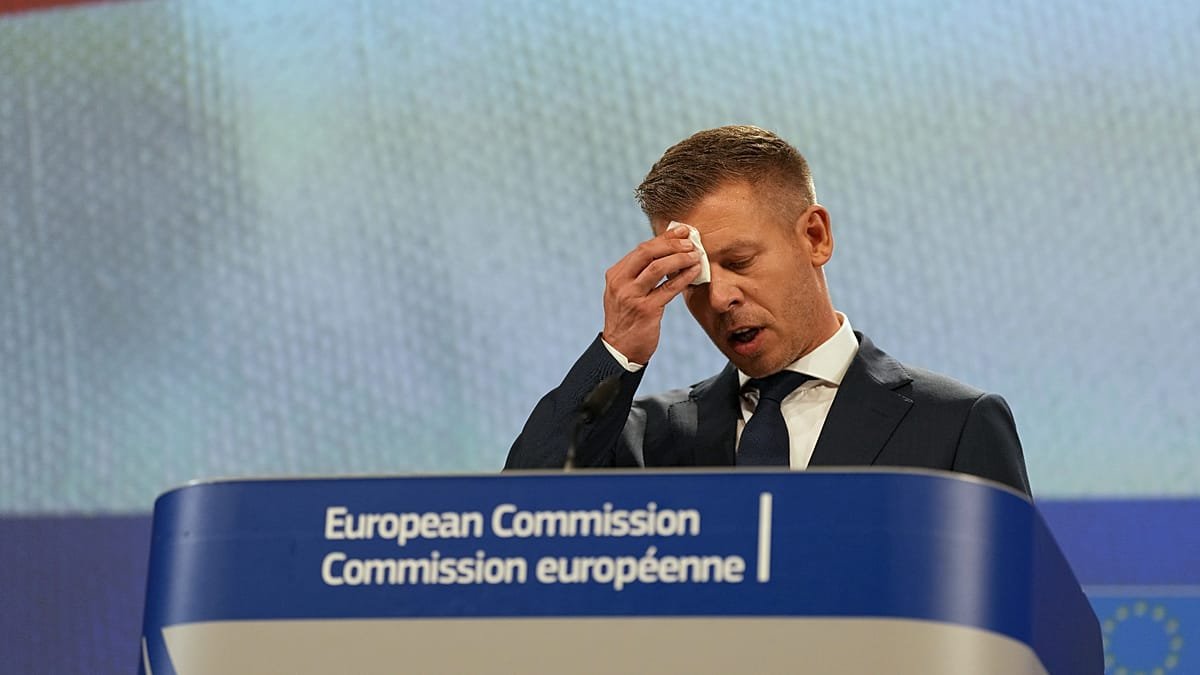
The thawing of relations follows the landslide election victory of the centre-right Tisza Party, led by Péter Magyar. Upon taking office, Magyar’s new government prioritized the adoption of a comprehensive series of anti-corruption and transparency measures designed to satisfy the conditions set by Brussels. These reforms were explicitly aimed at unblocking the frozen assets and reintegrating Hungary into the broader European economic and academic frameworks. The political change in Budapest provided the necessary leverage for negotiations with EU leadership.
Péter Magyar engaged in direct discussions with European Commission President Ursula von der Leyen to finalize the terms of the agreement. The two parties agreed on the release of a total package worth €16.4 billion. This sum is contingent upon the implementation of specific reforms and the execution of detailed investment plans outlined by the Hungarian state. The agreement represents a major diplomatic achievement for the new Hungarian administration, signaling a return to normalcy in its dealings with EU institutions.
Ursula von der Leyen welcomed the development, stating on social media: “A new chapter starts today. For Hungary and for Europe.” Her comments underscored the significance of the deal not only for bilateral relations but also for the cohesion of the European project. The immediate release of €4.2 billion addresses the most urgent financial needs, while the broader package includes additional components. Hungary is currently applying for €10 billion from the EU’s post-pandemic recovery funds. Furthermore, €2.2 billion is earmarked specifically for improvements in academic freedom, addressing long-standing concerns about the independence of Hungarian universities.
Hungarian officials announced at the end of August that they had fulfilled all the preliminary conditions required to access these funds. The European Commission is now conducting a final assessment to verify whether the requirements have been fully met. If the evaluation yields a positive result, Budapest could gain unrestricted access to the remaining money by the end of the year. This timeline depends on formal approval processes scheduled for the autumn. The resolution of this dispute removes a longstanding obstacle to Hungary’s economic integration and sets a precedent for how the EU handles rule-of-law disputes with member states.
This report was produced in the Europe Brief News newsroom.