EU Approves New Security Mission for Lebanon as UN Peacekeepers Prepare to Depart
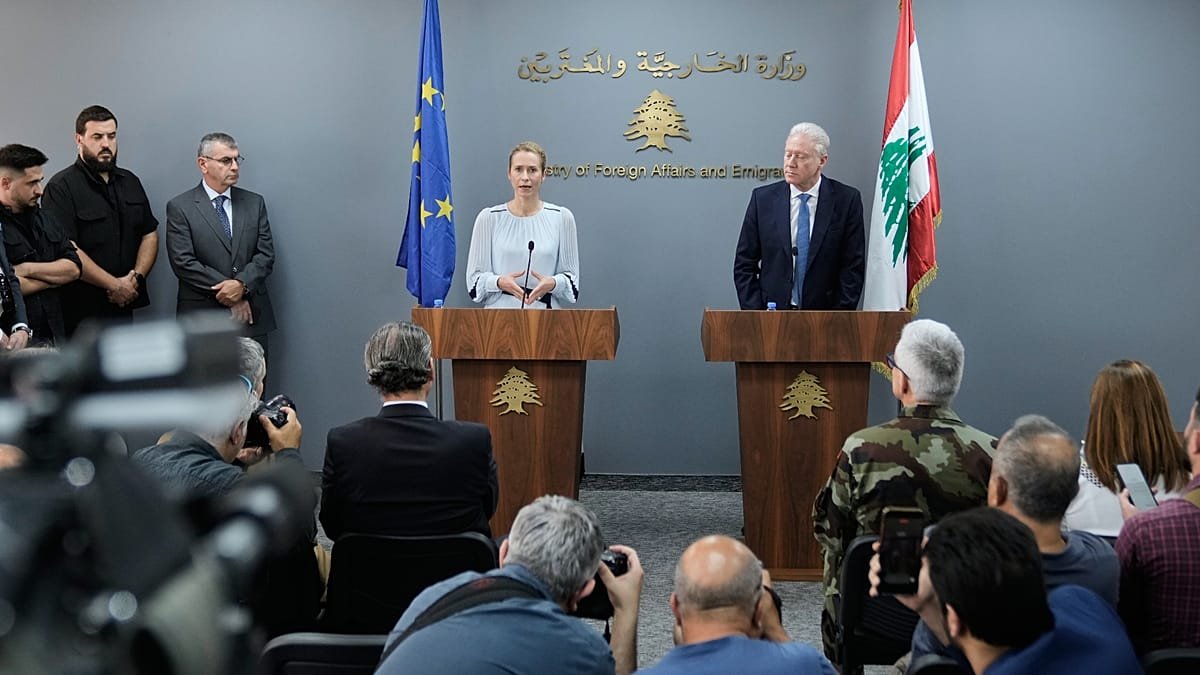
Brussels – European Union foreign ministers approved a new civilian and military mission in Lebanon on Monday aimed at strengthening the country’s security capabilities as the United Nations prepares to conclude its long-standing peacekeeping operation. The decision was made during the Foreign Affairs Council meeting in Luxembourg, where officials confirmed that the initiative will focus on border control, maritime security, and counter-drone operations rather than replacing the United Nations Interim Force in Lebanon (UNIFIL). EU foreign policy chief Kaja Kallas stated that the mission includes both civilian and military pillars and expressed hope that it would be operational within a few months. She noted that local authorities in Lebanon had welcomed the proposal following her recent visit to the region.
The new mission is designed to operate under the EU’s Common Security and Defence Policy with an initial mandate of up to three years, subject to renewal. Brussels is considering deploying approximately 150 personnel, a significant reduction compared to the roughly 7,500 peacekeepers currently serving with UNIFIL. Jean-Noël Barrot, France’s Minister for Europe and Foreign Affairs, clarified that the mission will support Lebanese police in their daily duties while carrying out specific tasks related to border and maritime security over a period of up to three years. He emphasized that the mission is not intended to replace UNIFIL but to enhance Lebanon’s own security infrastructure.
Unlike UNIFIL, whose mandate expires at the end of 2026, the EU mission will not be deployed in southern Lebanon where Israel continues its military campaign against Hezbollah. This distinction addresses longstanding criticisms from Israel regarding UNIFIL’s effectiveness in containing the Iran-backed group, as well as concerns from the United States which favors a direct security arrangement between Israel and Lebanon. Lebanese President Joseph Aoun has called for the extension of the UN operation’s mandate, reflecting the uncertainty surrounding the region’s security future.
Participation in the mission remains voluntary among member states, though several countries currently contributing to UNIFIL have expressed interest in maintaining a presence. These include Italy, France, Spain, Ireland, Germany, Austria, Finland, and Poland. The command structure is still under discussion, with proposals suggesting leadership rotation between Italy, France, and Spain. This aligns with a June announcement by French President Emmanuel Macron and Italian Prime Minister Giorgia Meloni regarding a joint coalition to support Lebanon after UNIFIL’s withdrawal, although it remains unclear if this initiative will operate separately or be integrated into the EU mission.
Ireland, holding the rotating presidency of the Council of the EU, signaled its intention to participate, particularly in the civilian component. Irish Minister for Foreign Affairs Helen McEntee highlighted decades of support for the Lebanese Armed Forces and civilian population, expressing concern that such contributions should not be lost. However, Dublin’s involvement in the military aspect may be complicated by ongoing reforms to the legal framework governing overseas deployments of Irish troops. Precise staffing numbers and final participating countries are yet to be confirmed.
This report was produced in the Europe Brief News newsroom.