UK Transport Secretary Orders Nats Chief to Report on Flight Chaos Within One Week
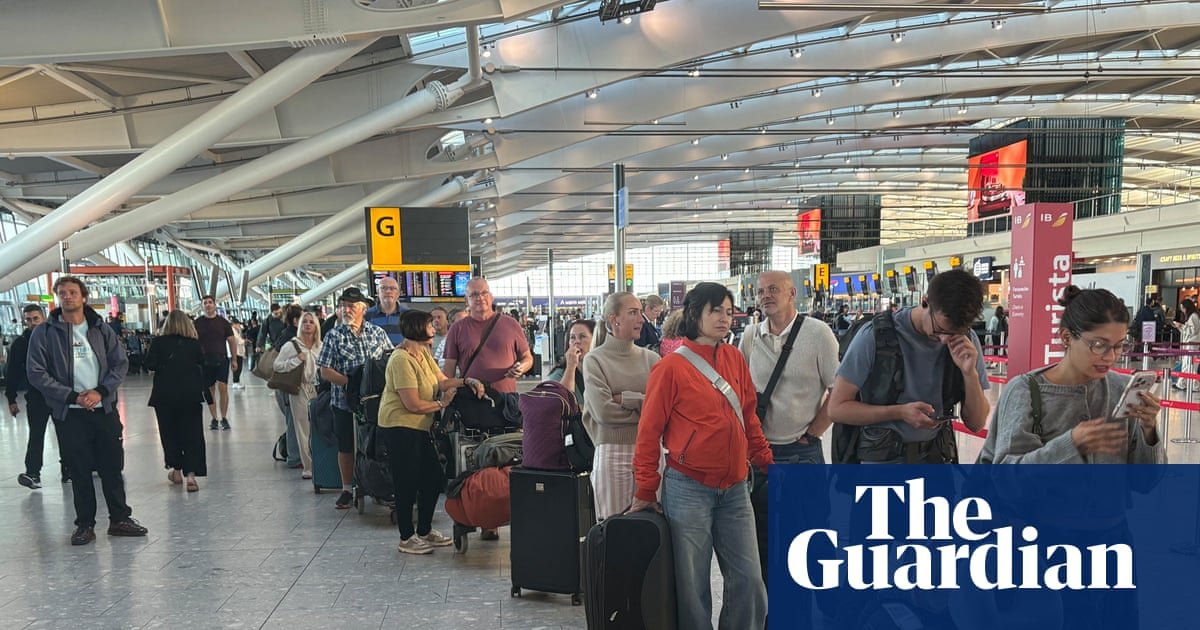
The head of National Air Traffic Services (Nats), Martin Rolfe, has been instructed by the UK government to submit a detailed report within one week regarding the technical failure that grounded thousands of flights across Britain. This directive comes as Transport Secretary Heidi Alexander expressed strong doubts that the disruption was unavoidable, despite Downing Street maintaining its confidence in Rolfe’s leadership. The incident, which began at approximately 1pm on Tuesday, severely impacted departures from major hubs including Heathrow, Gatwick, Manchester, and Stansted, leading to more than 2,000 flight cancellations.
Speaking to the House of Commons on Tuesday, Alexander confirmed she had commissioned an independent review by the Civil Aviation Authority (CAA) to examine the latest meltdown at Nats. She stated that while safety remains the overriding priority for air traffic controllers, she did not believe the issue could not have been prevented. Alexander noted that she had spoken with Rolfe that morning, who informed her the outage stemmed from a technical issue at the Swanwick site. Although Nats ruled out a cyber-attack, Alexander emphasized the need to ask tough questions about the resilience of Nats systems and address consumer redress issues.
A Downing Street spokesperson clarified that the prime minister’s office retains confidence in Rolfe, who has been tasked with carrying out a full investigation to ensure lessons are learned. However, this support stands in stark contrast to the growing pressure from airline executives demanding his resignation. The disruption affected approximately 330,000 passengers, with over 155,000 flights cancelled and delays impacting more than 180,000 others. Many travelers were stranded overnight at airports in the UK and abroad, while others remained stuck on grounded planes for hours.
Ryanair and Wizz Air led the charge against Rolfe, arguing that accountability is now essential after the third large-scale stoppage in just over three years. Ryanair chief executive Michael O’Leary declared Rolfe’s position untenable, stating that the industry does not need further investigations or parliamentary hearings where promises of change are made. O’Leary highlighted that UK air traffic control services are among the most expensive in Europe yet continue to fail repeatedly. He urged Alexander to demand Rolfe’s dismissal immediately. Similarly, Yvonne Moynihan, managing director of Wizz Air UK, invoked a "three strikes" rule, asserting that a third failure excuses no longer suffice and calling for clear leadership accountability.
Nats described the eventual fix implemented on Tuesday as a "very complex recovery" that created difficulties for the entire aviation network, noting it would take time to fully recover. The company insisted the problem occurred in its flight processing system and was distinct from the faults that caused outages in 2023 and 2025. Despite these assurances, Ryanair questioned whether lessons had truly been learned, reporting that its costs would run into millions after cancelling more than 250 flights affecting over 65,000 passengers. According to data from analysts Cirium, nearly 2,100 flights in and out of UK airports were cancelled due to the failure, with Heathrow alone accounting for 541 cancellations. British Airways apologized to customers, noting it cancelled almost 550 flights affecting more than 85,000 people, operating only 80% of its typical schedule. Meanwhile, the Rail Delivery Group advised affected rail passengers to use booked tickets on different dates or destinations, or apply for refunds.
This report was produced in the Europe Brief News newsroom.