
Tusk Warns of Russian Drone Strikes on Poland and NATO Allies
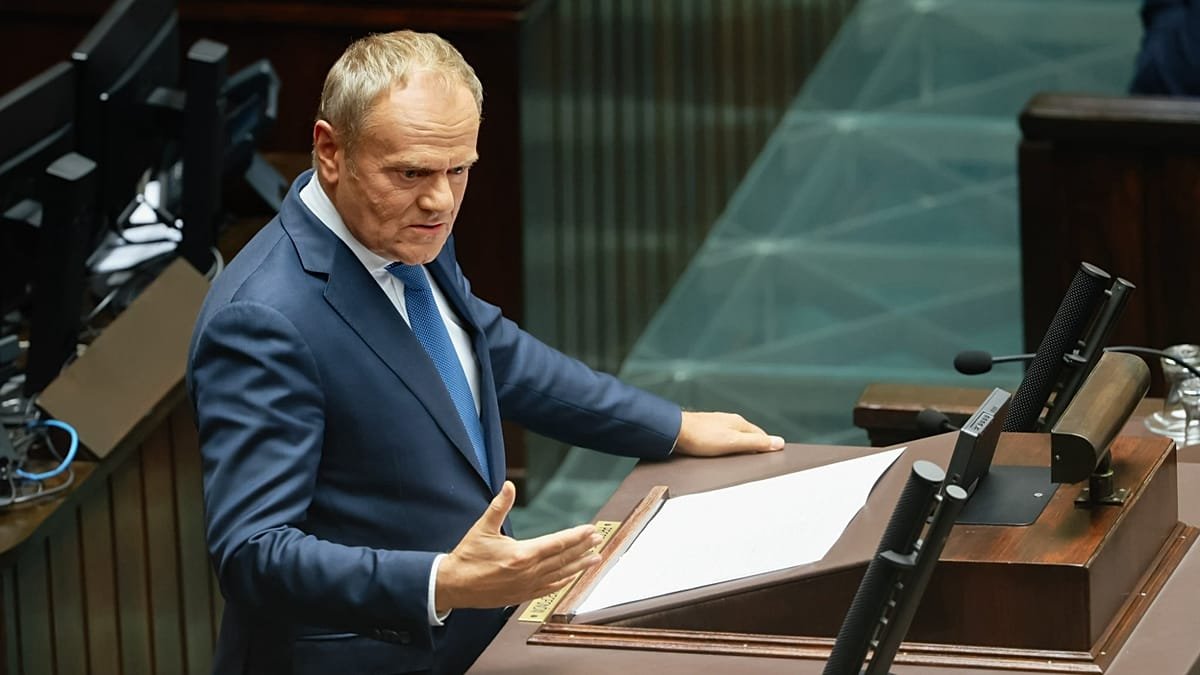
Prime Minister Donald Tusk delivered a special address to the Sejm on September 17, 2026, presenting what he described as the "most probable scenario" for the upcoming months. He warned that Poland and its allies face serious events requiring mental readiness for difficult tests. According to Tusk, the period up to early spring is critical, with late autumn and winter identified by all sources as the most dangerous phase of the Russian-Ukrainian war so far.
The prime minister highlighted a significant negative development: Russia is mass-producing jet-powered drones capable of high-speed, high-altitude operations before striking targets. Tusk noted that few are effectively prepared to counter these threats, stating that this is work Poland must undertake. He announced plans to travel to Ukraine to discuss cooperation within the anti-ballistic coalition with President Volodymyr Zelensky, aiming to utilize Ukrainian capabilities alongside those of other nations.
Tusk also addressed the failure of an energy truce previously mentioned by US President Donald Trump. Since then, attacks on Ukrainian energy infrastructure have continued, increasingly targeting installations near the Polish border. The prime minister stated that Russia aims to destroy Ukraine's economy and logistics on a large scale. Constant, high-intensity strikes are expected on six key Ukrainian cities, along with the destruction of essential supply stockpiles and railway infrastructure. In recent weeks, Russians have destroyed more than 300 Ukrainian railway locomotives.
According to the prime minister, intelligence services assess that Russia’s plans include hybrid strikes using drones and missiles against states supporting Ukraine, including Poland. While such possibilities had been mentioned before, Tusk stressed that current information is now "highly consistent and, unfortunately, persuasive." He explained that potential strikes would likely be framed as "accidental," designed to weaken NATO members' motivation to invoke alliance provisions. There is a real risk that drones or missiles may enter the territory of one or several eastern flank NATO countries, causing destruction while maintaining an official narrative of accidentality.
Russia’s objective, according to Tusk, is to weaken NATO’s overall cohesion and convince member states that Article 5 is more theoretical than practical. Such accidental strikes may be repeated. The prime minister further noted that Russia’s strategy includes influencing political changes in European countries through pro-Russian forces in forthcoming elections. He appealed to politicians, particularly MPs from the Confederation party, not to promote narratives favorable to Russia. Whipping up hostility toward the EU, allies, or Ukrainians directly implements Russia’s strategy, he underlined.
In closing, Tusk called for unity, urging all present to speak with one voice and show patriotism regardless of political views. He criticized some European politicians who wait for an alibi to avoid conflict, declaring that allied loyalty and fidelity to commitments must become the hallmark of the bloc. Poland needs certainty that it can count on a swift and effective response from the entire bloc in the event of a more serious threat from Russia.
This report was produced in the Europe Brief News newsroom.